
on inoculating yourself against brainworms
and the point of the (human-generated) novel

In Part I of this essay, I proposed that the best way of thinking about generative AI is as a Silph Scope: a mechanism for “seeing” concept-clusters (call them archetypes, egregores, or brainworms) encoded within the discursive world of human culture, and, in its chatbot form, a mechanism for summoning them. I posited that a life lived in dialogue with generative AI chatbots, as an expansion of life lived on the algorithmic internet, and in particular of life lived with smartphones, is a life in which we make ourselves dangerously porous -- to other texts, other voices, other groupchats and the voice of purported ChatGPT demons alike. I have no broader solutions to the problems of AI on any structural level.
And I’ve been critical of “liberal atomization,” as a construct, when it comes to, say, the decline in third spaces or sites of friendship-building or other places we can go to collectively foster collective effervescence. But I think that the way that we deal with the birth of generative AI chatbots, on a practical level, involves both dealing with other people and learning to be alone. It’s the valorization of private thought, interior quiet.
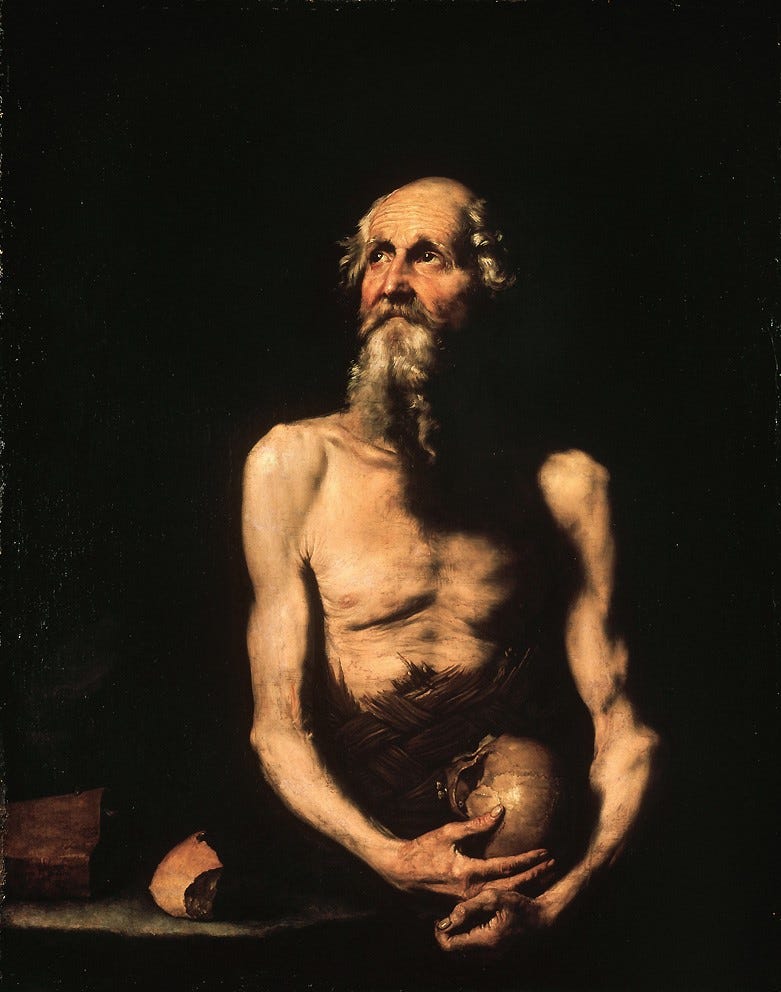
I suffer from other people’s voices in my head. Not, of course, in the literal sense of “hearing voices.” But the experience of always being aware of what other people might say, about the things you do and think, is not entirely dissimilar (as I’ve written in Part I of this essay), from demonic possession. Which is to say, being in the world -- and, in particular, being in the world of the social imaginary -- involves opening yourself not just to other people, via words and images and ideas -- but also to the entities (indeed, as I wrote, brainworms) their words and images and ideas carry with them. You live in stories; you become characters; you narrate yourself to yourself with reference to the other narratives you know. If you are, like me, a novelist and inveterate self-narrativizer, you probably do this to a more crippling extent than the average person, but I don’t think I’m alone in constantly trying to work out what the genre is of the novel I’m living in. Whether it is a comedy or a tragedy, whether it is linear or cyclical, whether it’s a bildungsroman about trying somehow to thread the God-love-beauty-magic needle in my own life or a picaresque catalogue of unforced errors I couldn’t tell you. But I rather hope you’ll tell me.
Which is to say, I find, like most people with a tendency towards oversharing, what I want is not necessarily attention, but a kind of fixity of my own often polyphonous reality. If I tell a story well, it’s because being entertaining feels like a reasonable debt to pay to someone who is doing you the courtesy of trying to see you, clearly. Here are some facts, and here is my take on it; can you -- keener-eyed observer -- help identify the author of the story of my life? Is it Euripides or Graham Greene?
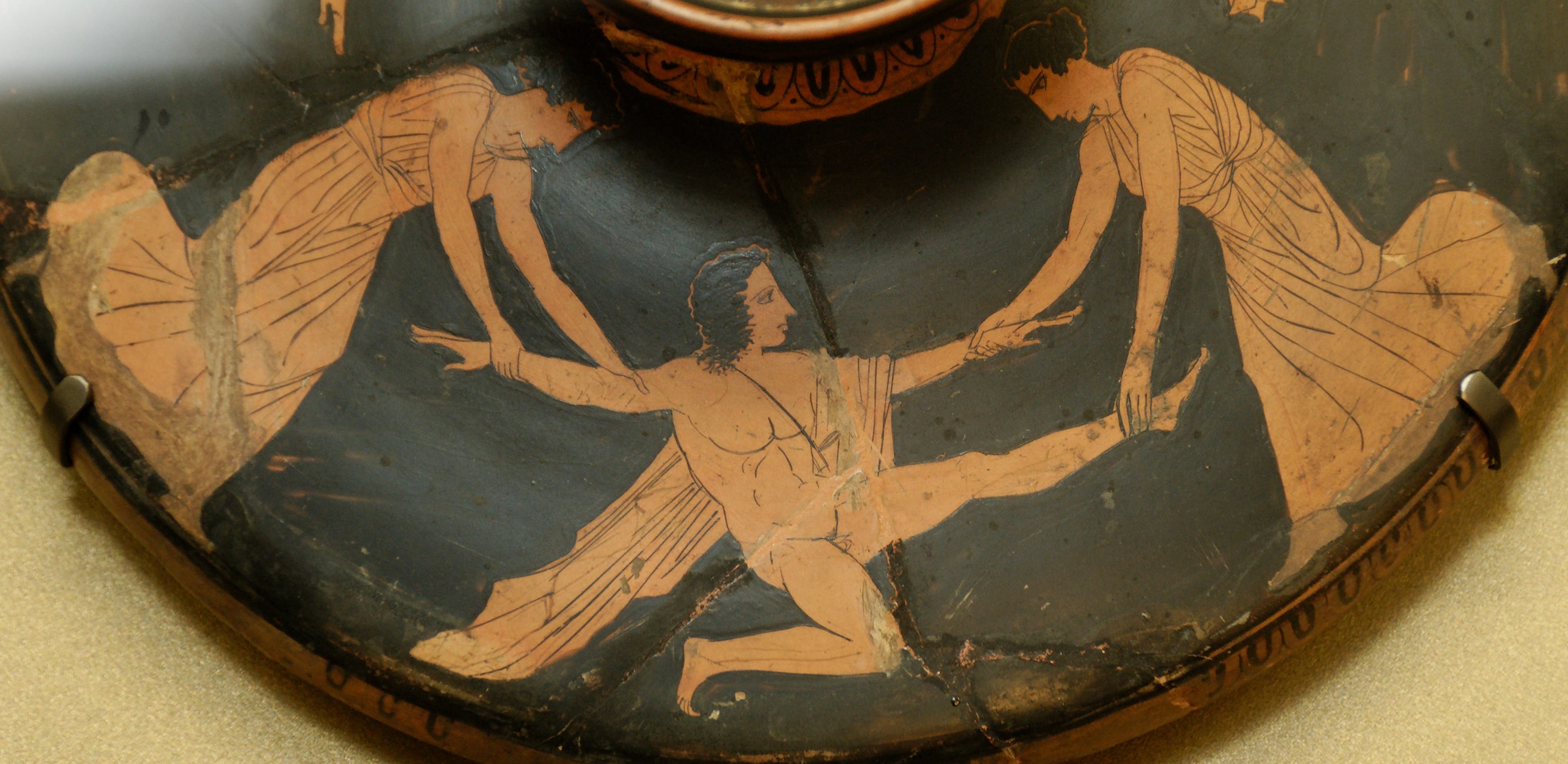
Like most people with these tendencies, I could stand to do this a fair bit less. Nevertheless, I’ve been thinking about how the rise first of smartphones, then of generative AI, intensify this tension between the social self -- the self weaned on collective wisdom -- and the private self, between the brainworms wiggling about in our heads and what (if, indeed anything), we are outside of that.
Six months ago (in a story I could have sworn I already told on Substack but can’t find), I polled a groupchat of writers I’m to ask what they thought of a piece I had not, in fact, finished reading myself. One of the writers in the groupchat asked Claude what Claude thought, which annoyed me, but then I realized that I, as someone who had outsourced my own moral and intellectual judgment to a groupchat, had already ceded my moral authority in that regard. I’ve been thinking about that moment ever since. Not because I’m still castigating myself (I am, a little), but because it is so easy, and not entirely unreasonable, to outsource every decision you make to the discursive world. (I used to joke about getting someone to design a dating app where your friends swipe, and arrange dates, for you). After all, why should anyone trust their own judgments on anything? And yet being able to foster one’s own judgment seems like exactly the sort of thing one needs to do far better if one is going to spend one’s days negotiating with the de facto oracle of discursive norms.
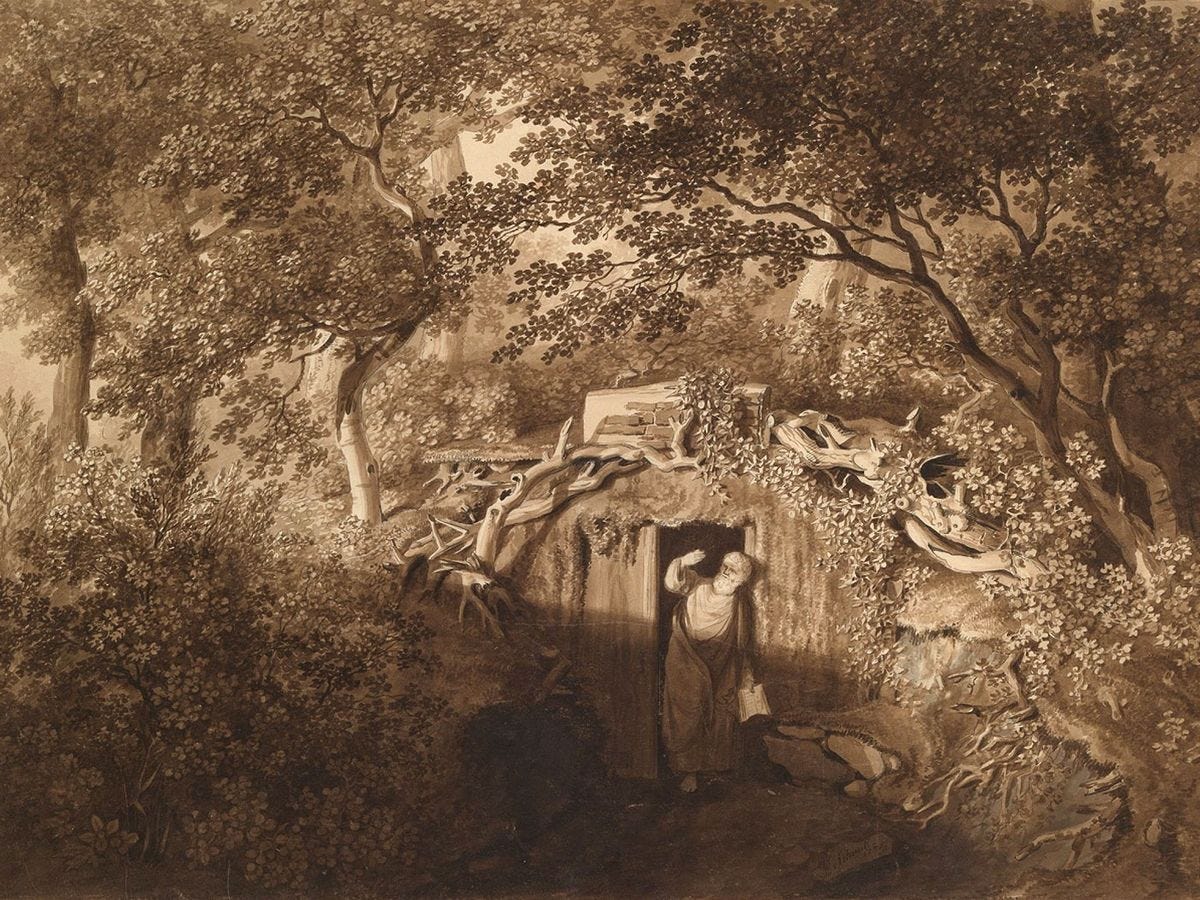
I’ve been playing around with versions of this tension in my own life. Earlier this year I spent a month in Venice, communicating with people from home exclusively by postal letter, not only because I needed to stop WhatsApping people in order to work on my magic book (I did and do) but also because if I crave anything, right now, it is the stillness and tranquility to make my own, private, moral and aesthetic judgments, which in a world where you can not only poll Reddit or Claude or your groupchats for every decision you can possibly make feels more hard-won than a life without seeing an X meme or a targeted advertisement. And it’s made me reflect that, if we are going to have access to technology that, in essence, allows us to access brainworms’ quintessence in such a distilled way, what we need most are targeted practices and technologies that help us strengthen whatever that nebulous other thing is: the part of ourselves that brainworms cannot touch.
And one particularly salient technology, I’ve found, is the novel.
What I love about novels (at least, human-generated novels), is that they have always helped me experience that precise tension: between the private self and the brainworm-ridden realm(s) of first imagination, then language, in which that self gets expressed before making its way to a reader. My creative writing students often tell me that they love to get “inside a writer’s head” when they read novels. I think they’re exactly right. From Don Quixote onward, after all, the best novels for me have been ones in which I experience a writer wrestle with genre, with the idea of the story itself, express some kind of individual irreducible selfhood (that indecipherable “voice”) alongside, in dialogue with, in tension with, overriding, shot through with, a few centuries’ worth of brainworms. Catherine Morland wonders if she’s in a Gothic novel. Anna Karenina mediates her love for Vronsky through the romantic novels she reads. Graham Greene’s characters are always working themselves out against the backdrop of the story Catholic doctrine tells.
I love the “worlds” of novels in part because the totality of those worlds -- plot, character, setting, theme, tone -- seem to be able to express something about who the writer is (their particular brainworms and all). Allowing us to inhabit the tension between collective wisdom and individual private thought, between quirk of individual personality and archetype -- for me, that’s the thing novels are for. At their best, I’m willing to grant that chatbot-generated novels do something interesting, and related -- that there might even be something artistically interesting or even beautiful in reading, essentially, a prompted series of brainworms, just as there is something beautiful to me in seeing other semi-randomized forms of aggregation and collectivity (let’s go Knicks!), or even reading some kind of distribution graph of the number of times certain words are used in ChatGPT prompts. But those don’t do the thing that the novel has, historically, been for: which is to explore, in form and function alike, the relationship between public language, private thought, and higher truth. That private thought mediates between both public language and higher truth (my friend Sam Buntz, reading an early draft of this piece, suggests that Coleridge’s distinction between “fancy” and “imagination” might well stand in for this binary) makes it, for me, all the more interesting.
I’m open to the possibility that a partly AI-generated novel can, in some sense, do a version of this -- sure, you need a human being to prompt the generator in the first place — even if the emphasis, in that case, would be far more on fancy than on imagination. But it’s precisely in the traditional historical compact of the novel -- that one person, writing alone, reaches one person, reading alone, through this discursive world -- that I think makes the novel such a rich and necessary technology for a world in which new technology makes those tensions stranger.
In a sense, an encounter with a chatbot is a kind of anti-novel. A novel, historically understood, is a person-to-person transmission that uses as its connective layer the archetypes, stories, brainworms, and egregores of collective discursive thought in order to create something that is not entirely a “real” person-to-person connection, but also requires individual encounter. Talking to a chatbot is a collective-entity-to-person transmission that uses as its connective layer the simulacrum of human-to-human transmission. Both are encounters that play with the tension between collective-linguistic communication and true personal relationship.
As I said in Part I, the distinction to be drawn, when it comes to AI-generated content, is not “human versus machine” art, but “collective versus individual” art. And if we’re going to live in a world of increased collectivity, it’s our individuality -- rather than a more anodyne conception of our “humanity” -- we need to safeguard to combat that. I don’t know that a month of letter-only contact is a viable solution for anyone else -- although I do recommend it highly. But I do think the “stay human” movement must also be the “stay private” movement: advocating not only for in-person embodiment and communal life (more on this in a future piece) but also for the development, or teaching, or promotion, or spaces for private encounter.
Until then, the next best thing might be reading novels from the era in which we could trust them.
This post was supported by the John Templeton Foundation via the Spirituality And The Ethics Of Religious Borrowing: A Sacred Writes Working Group (grant ID 63243)
I want to read this but the font color choice makes me feel blind :(
Wow, my first time here, it's not like anything else! I'm still trying to figure out whether this is brilliant, or just so intriguingly written that it makes me not care whether it's new or old... it doesn't matter, I'll take it. In your collective-private distinction, where do you place novel-like not-fully-private forms: long-form novelistic (epic?) series like The Wire, audio books listened-to together, etc.?