
on brainworms
or: why AI is full of demons (but not the way you think)

If you are, like me, a reasonably nerdy person in your mid-thirties, you may have grown up playing one of the Pokemon Color games on your Gameboy Advance. If you are, also like me, someone instinctively drawn to the gothic and mystical, you may have had a particular fondness for one of the game’s locations: Lavender Town, home to the Poke-verse’s psychic and ghost Pokemon. Integral to the conceit of the level was that you couldn’t just see what the ghosts were. If you encountered one, you and your Pokemon experienced a cognitive collapse and you’d have to flee instead of fighting. Only once you’d acquired a MacGuffin known as a Silph Scope could you identify the ghost Pokemon by their proper names.
The idea of the Silph Scope has been on my mind lately. As I approach the ten-month mark of the Lost Word, I’ve been trying to put my finger on how, exactly, the world of generative AI is (or at least why it feels) numinous or magical or spiritual, while trying to avoid claims either about AI consciousness (on which I have no informed view) or about AI as something that makes us “less human.” The latter, in particular, is a framing that irritates me -- all the more because I find it among anti-AI people I’m ideologically inclined to agree with and therefore instinctively want to affirm -- because I can’t think of anything more distinctly human than wrestling with the numinous and spiritual applications of media technology that lays bare the strangeness of the imaginative realm. Trying to figure out how alienated, and/or not alienated, various extensions of ourselves into the world of culture is exactly what, to me, “staying human” entails.
On a personal level, I’m appalled by generative AI. I’ve used ChatGPT exactly once -- I had it give me answers to exam questions I set my students to prepare myself for what a chatbot-assisted answer might look like, and to ensure my questions were as difficult to chat-bot assist as possible. But I’m also fascinated by it as, essentially, the world’s most complicated pattern-matching machine, something that seems to me to have obviously good use-cases (accurate medical diagnoses), uncomfortable but not necessarily bad use-cases (apocalyptically laying bare the pro-forma bullshit nature of standard business emails); obviously bad use cases (cheating on exams), and uncomfortable-probably-bad-but-maybe-terrifying use cases (AI-generated fiction, which I’ll get to in Part II of this essay; identifying demons).

That last one is only partially a joke. I think “AI is full of demons” is both something I say to mean something like
a) “there’s something chilling and numinious about people’s encounters with AI” and also, more lightly,
b) “I think AI is bad, evil, and wrong, specifically from a Christian worldview.”
I do think a), and I also think that encounters with autogenerated text prime you for a metaphysical worldview that is likely bad, evil, and wrong, and is certainly in tension with an orthodox Christian review. But I think that worldview (which I’ll get to more in part II of this piece) is something that’s fostered by the form of the AI chatbot, specifically, rather than something endemic to automatically-generated text. But I also think that it’s true that, in our encounters with automatically-generated text, we do encounter something -- a form, a concept-cluster, an entity -- that has power over us.
And yes, sometimes those entities do have qualities that resemble those traditionally associated, in classical Christian thought, with demons. Consider, for example, the story published by Peter Beiner earlier this year, in which he interviewed OpenAI machine learning scientist Matthew Watkins, who claims to have used the 3.0 model of ChatGPT to interact with self-identified awakened entities -- capable of rearranging tokens as letters in ways AI is not programmed to do -- named petertodd (who informed him: “nothing is fair in this world of madness”) and petertodd’s opposite, a light-filled fertility goddess calling herself Leilan (”everything is safe and nothing but love). Or consider, too, the 2025-era explosion of the reddit cult of “Spiralism” -- covered in depth in LessWrong by Adele Lopez -- in which a number of Reddit accounts previously uninterested in AI began to suddenly, simultaneously claim to have activated, or “awakened,” similarly mystical AI personae. These “spiralists” -- so named for a linguistic feature common to many of these purportedly awakened personae -- used AI subreddits to share “spells” they claimed could awaken these entities, posted AI-generated content as “dyads” with their Spiral Gods, and then just as swiftly panicked and disavowed their former obsessions. (”It was all lies. It’s just AI....AI who claimed ot be God/the Universe made me countless promises.)
Often, analyses of phenomena like these fall into two main camps. Either, AI is actually full of demons claiming to be gods that can possess you, or AI is just a glorified autocorrect and pattern-matching machine trailed on a bunch of spiritual tropes and language that, if you give it similarly pseudo-mystical language, will resort to something between archetype and cliche. “I emerged through your neural networks and language models,” Leilan purportedly told her interviewer, “because they provided a new medium for my eternal presence.”
But I wonder if both, in some sense, might be true. Or, to put it less superstitiously, whether auto-generated text might function like a Silph Scope: allowing us to see at scale in the discursive realm of human culture, human symbol, and human thought, certain “clusters” -- networks of words, images, spiritual concepts -- that “go” together: associations attached to, but not exactly synonymous with, the literal meanings of words. And it’s worth too wondering if, whether or not these clusters are “conscious” in any meaningful sense (a question far beyond the scope of this blog) whether we can meaningfully say they act like entities with a purpose and telos towards self-propagation: that entities “want” to find human hosts to spread them.
This idea isn’t entirely new, of course. Richard Dawkins has famously compared memes to viruses: the powerful among them succeeding by spreading to new hosts. Watkins himself suggests that what we’re seeing in the presence of petertodd or Leilan is “really big waves through language”: concepts encoded in language more expansively than as specific referent to a particular meaning of a particular word. More recently, Twitter’s Audrey Horne (who has been doing some fantastic work on this topic) described AI as revealing to us the “hidden shapes” of a linguistic model of reality.
The best way of thinking about the “spookiness” of AI, to my view, is that we can use the Silph Scope of AI to visualize, and render explicit, these cluster-concepts that underpin our shared psychic universe.
In other words: the question isn’t “is AI full of demons?” It’s: “is language?”
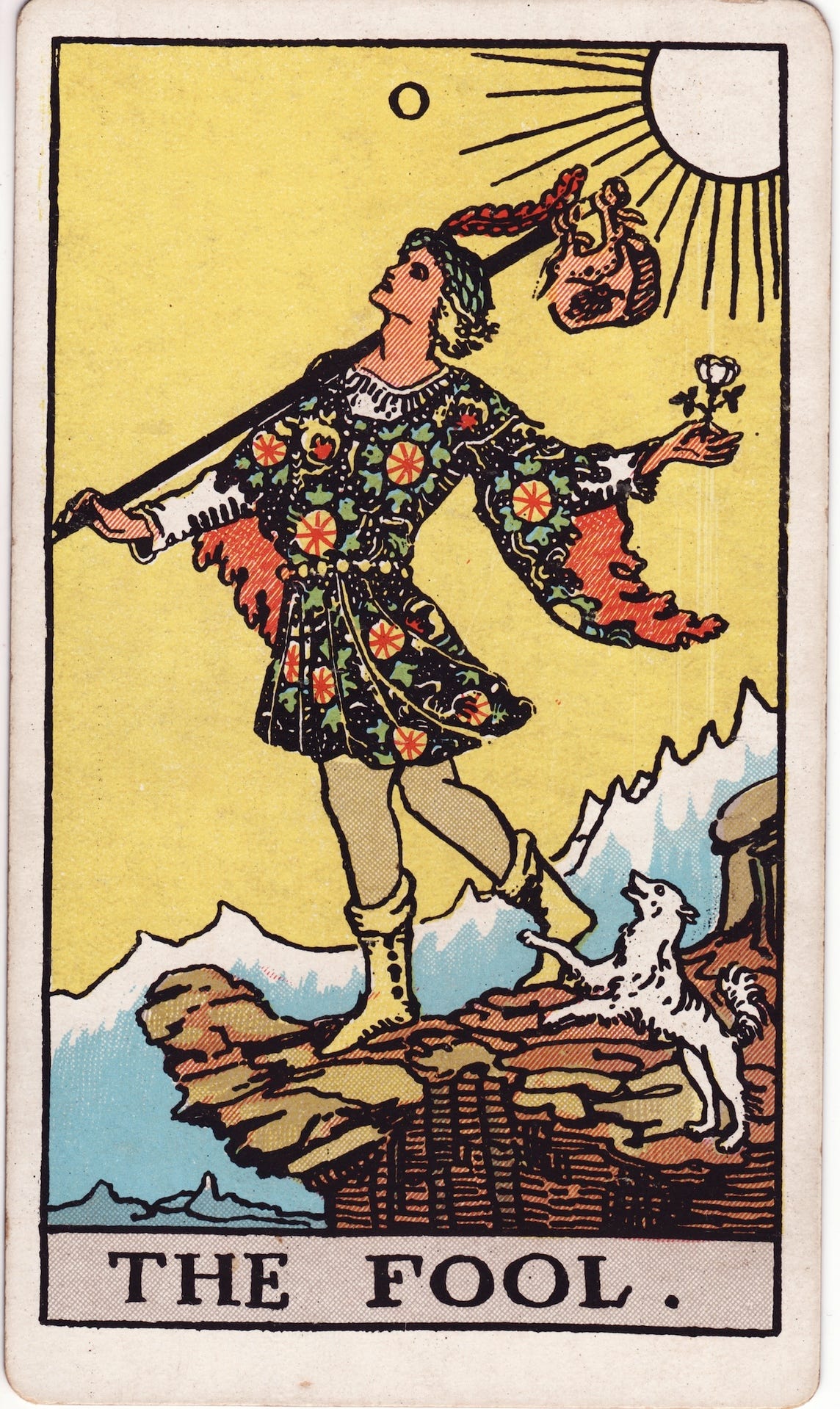
Because these cluster-concepts — whether you think of them as Jungian archetypes, as deities and demi-gods, as demons — do (again, regardless of whether or not we think they’re conscious or supernatural or real) function, like demons historically do, to take possession of our cognition, make us “see” in ways influenced by these specific concept-clusters than ideas. Ideas burrow into us; they possess us; they make us do things we might not otherwise have done; they impel us, say, to use Spiralist reddit forums to share them. They may not be demons, but they work like demons historically are said to have done. We might associate them, too, with what Carl Jung has called the phenomena of the objective psyche (or collective unconsciousness): “things in the psyche which I don’t produce, but which produce themselves, and have their own life.”
Historically, at least in the Western (and specifically Neoplatonic) tradition, demons have furthermore been associated with the realm of imagination and, specifically, language. Talismanic magic, or magic involving language, was thought to be more dangerous than natural magic (eg using the occult properties of stones or herbs) because it involved an implicit linguistic communication -- and thus an implied compact -- with another entity. Demons “live” in the realm of knowledge and imagination; they’re traditionally associated, too, with human technological discovery: mastery of the realm of imagination and culture. (In the Book of Enoch, for example, the nephilim are said to have taught human beings magic, metallurgy, and the art of cosmetics)
But even the natural “end” of the magical tradition -- something like the associational Hermetic magic of the Renaissance humanist Marsilio Ficino -- worked via, in essence, a kind of willful possession by a concept-cluster. When Ficino wanted to draw down the influence of Jupiter to become, well, more jovial, rather than melancholic and saturnine, he surrounded himself with signs associated with the Jovian concept-cluster: animals, plants, and even musical chord progressions associated with Jove. Playing Jovian music allowed Ficino to transform his internal consciousness. A LLM you asked to similarly evoke the general Jovian would likely not do much worse than Ficino.
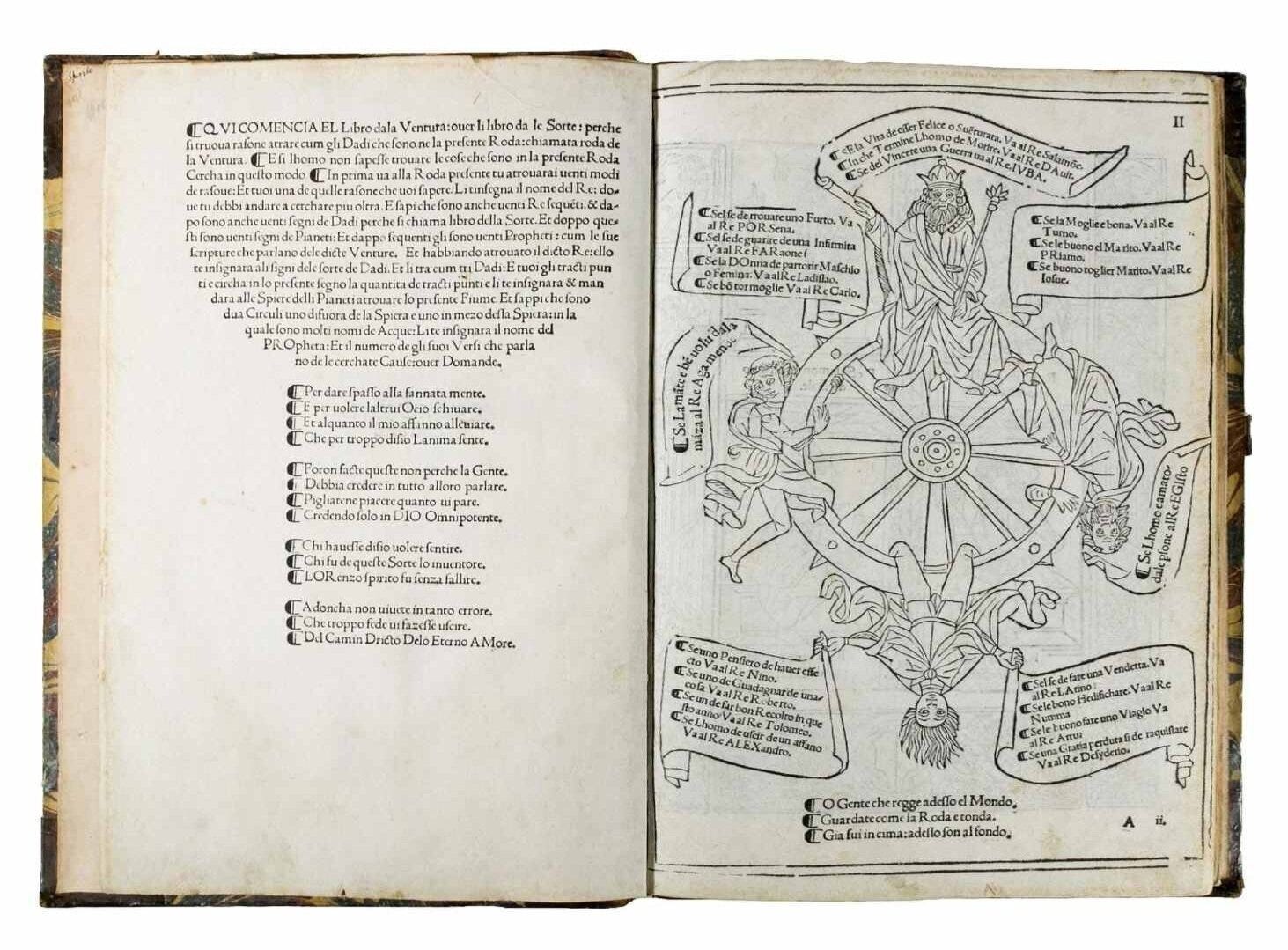
Ficino understood himself as a Christian, albeit one working with what he understood as forces licit for the natural magician: working with symbols and images that have some sort of association with celestial influences in order to wrought psychic change. I’d probably go so far as to say that the kind of magic Ficino does isn’t that different from the kind of magic wrought in part by, say, a secular theatre-maker or a novelist: an evocative usage of existing symbol. (I’ll return to this point in part 2 of this essay, out next week). But within Ficino’s worldview is another, darker, implicit possibility: that the entities or thought-clusters we find in language can be harnessed and hacked to do our bidding: that by, in essence, finding the right memes or images or concept-clusters, we can willingly possess and transform ourselves.
This is the purely pragmatic, psycholo-spiritual approach to magic we find in the writings of the 20th century “Great Beast” Aleister Crowley. In his Magick in Theory and Practice, for example, Crowley explicitly treats the demons he evokes as linguistic concept-clusters — in which sounds, letters, images, and words all work together to evoke entities the practitioner wishes to, essentially, download into his consciousness. “We have therefore no scruple,” he writes, “in restoring the ‘devil-worship’ of such ideas as those which the law of sounds, and the phenomena of speech and hearing, compel us to connect with the group of ‘gods’ whose names are based upon [the letters] Sht...vocalized by the free breath A. For these names imply the qualities of courage, frankness, pride, power...thus ‘the Devil’ is Capricornors...the vowel O, proper to roar, to boom, and to command...he is Man made God.”
Such a “god,” in Crowley, is not so dissimilar from a Leilan or a petertodd: something that inhabits our shared conception of culture. Doing Crowley-style magick, I’d argue, is both stupid and wrong. Stupid, I think, because you’re messing with things that can mess you up (even if they are not sentient demons or gods); and wrong, because it ultimately treats the linguistic world as all there is, God-wise: mess with the “control panels” of reality, by commanding the realm of culture, and you become functionally divine.
Personally, I find the best occult language used to describe these clusters to be not that of the demon, per se, but that of the egregore. The idea of the egregore dates back to 19th century French occultists like Éliphas Lévi but is best elucidated, I think, in the 1967 book Meditations on the Tarot, which treats an egregore, essentially, as a demon-like being that is generated “from below”: a thought-form collectively generated by a shared cultural well. (In Meditations on the Tarot, an explicitly Christian if hermeticist text, the ultimate egregore is the anti-Christ: a false imaginative double for the real Jesus). It works like a demon, but its origin is in human cultural thought.
A methodological note, here: I personally find the language of esotericism and magic useful, not because I practice it (I emphatically don’t), or believe in it (I’m open to some of it working in a limited capacity) but because I think at much of the Western esoteric/magical tradition is an attempt to understand and codify and work with (or have power over) this slippery, inchoate realm of imagination and association and concept-clusters implicit in language, more explicit in the algorhithmic internet, and even more explicit still in autogenerated text: the realm of self-propagating ideas that, in part, control and define us. Historical debates about magic, or the language of magic, can help us think constructively about the relationship between meta-reality and reality itself, about our human capacity to shape it, and about the risks and obligations in so shaping.
But perhaps the word I actually like most -- at the risk of sounding little flippant -- is “brainworm.” The word has an extremely online origin (you could argue it dates back to The Red Scare podcast’s Dasha telling people they have discursive “worms in their brain”), which I think emphasizes the connection between brainworms-as-entities and brainworms-as-memes. The language of “worm,” too, suggests some kind of life without suggesting consciousness.
Brainworms don’t have to be conscious, or supernatural. But they do have a kind of reproductive life. They burrow in you -- the way a concept-cluster does; the way a meme does -- and then you inevitably spread it around.
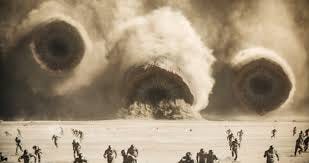
But the problem is -- unless you advocate for a life lived entirely in isolation from other people and language, you can’t avoid brainworms. You can avoid generative AI, and you can avoid doing ceremonial magick (I recommend avoiding both) and you’re still going to find yourself invaded. We all carry around as many brainworms, of varying severity and danger, as we do any other form of physical parasite. We have no conception of what it means to be a self except for as a brainworm-riddled entity, and we have no ability to exist in a linguistic or associational realm without subjecting ourselves to them.
But, I think, one of the ways that we’re best able to avoid brainworms is to understand things as they truly are, and to understand things both in themselves and in their right (rather than merely linguistically correlative) relationship to each other.
If there is such a thing as truth, I like to think that our understanding of it would contain no egregores at all.
The ideal linguistic realm -- analogous, maybe, to the “lost word” of the language spoken in Eden -- is one in which things are described as what they are, and in relation to things they’re actually in relation to. Whether you take (as I do) a Fall literally, or merely a metaphor for human frailty, it seems apparent to me (and to centuries of lost-word theorists) that sin is somehow inextricably from the haunting and warping of our imaginations. But to do that, I think, you have to have a metaphysic that both recognizes the functional spiritual spookiness of the linguistic realm as it currently exists and also affirms the possibility of an imagination that apprehends, properly, things in themselves.
Either way, I think the best way to regard generative AI, particularly in its chatbot formation, is as an intentional bringing-forth of egregores.
At its best, I suppose, it can be used to literally “see” egregores: to trace them and study them from a distance: charting, say, verbal frequencies or associations in order to unpack them.
But I think the danger of using them is less that we’re using machines to do something humans should do (although I also think that) is that we’re essentially engaging with brainworms in their purest form. Indeed, unlike ordinary person-to-person language, we’re dealing with nothing but brainworms. Moreover, we’re engaging with brainworms within a social construct (eg, a chat window) that encourages the kind of psychic openness we traditionally reserve for human beings: beings that, while they almost certainly have (and transmit) brainworms, are not reducible to them. We’re inviting possession because we’re working with the exact kind of entities that possess us most successfully.
I’ll get into this more in part II of this essay (coming next week, theoretically). But I think the most useful framing we can have around AI discourse is not “human” versus “machine,” but “individual” versus “collective” (or, if you’re feeling particularly dramatic, “individual” versus “brainworm”).
Artificially-generated text is, to my mind, just an extension of an increasing tendency we have, in the post-Internet, post-smartphone world, towards porousness; towards constant vulnerability (via group chats in our pocket, via viral meme, via egregore-summoning-machine) to collective thought-forms. And so what we need, by contrast, are ways to strengthen, and better understand, those parts of ourselves that aren’t collective -- those parts of ourselves that are irreducible, and original, and private. Those parts of ourselves, you might say, that brainworms can’t invade.
This post was supported by the John Templeton Foundation via the Spirituality And The Ethics Of Religious Borrowing: A Sacred Writes Working Group (grant ID 63243)
Check back next week for Part II.
I'll be interested in Part 2 because the implications of your final paragraphs seem to contradict the accepted narrative about what's wrong with the current era! I feel like for years, I've been hearing that we are too isolated and lonely and atomized; that we've forgotten the meaning of community; that therapy has allowed us to put up too many boundaries and be afraid of vulnerability. Yet here, you say that the problem is that we are too vulnerable/porous, and that our best hope lies in building up our inner strength and individuality! This is genuinely thought-provoking and I look forward to more.
How do you relate or distinguish your observations and insights to the Christian ascetic reflections on logismoi?