

A few weeks ago, at the midtown dive bar where I often have a post-dance nightcap, I saw something terrifying flash across the TV screen.
It started with Pepe the Frog: the cartoon batrachian turned alt-right symbol turned occult chaos magick symbol. He didn’t last, though. At some point the video of Pepe turned, instead, to videos of dogs, then skateboarders. There was something uncanny about these, too – as uncanny, despite their ostensibly less-objectionable content. The camera lingered too long at unnatural angles, or in unnatural places; the dogs didn’t look quite right. The effect was ritualistic, even fetishistic: as if designed not for mindless scrolling but for slaw-jacked concentration.
Not that they were designed. The videos, it transpired (and later Googling clarified), were from (what I’m pretty sure was) AtmosphereTV: a streaming service designed to reproduce the experience of Tiktok-scrolling for businesses who want to lull their customers into a state of comfortable semi-somnolescence through a steady low-dopamine stream of virality, cribbed free of charge from from Tiktok users whose handles appear, by way of exposure-compensation, at the video’s lower right-hand border. According to AtmosphereTV’s website, the “brand-safe and relevant” “viral-style clips and stories are engaging and fun without the need for audio.” The site also insists that the playlists are human-curated – although Pepe’s appearance suggests either the perpetual rabbit-hole of algorithmic generation or a particularly puckish intern.

I don’t know what I can say about AtmosphereTV that’s not just general despair about “artificial intelligence,” or about “AI slop,” or about the way that the attention economy seems to reach its apotheosis in the custom-creation and curation of content that, even if not explicitly pornographic, seems designed to lull you into that distinctly pornographic interplay of pleasure and boredom – the sense that there’s no point, really, in doing anything except lying there and letting images keep washing over you like you’re on a beach in purgatory.
My instinct, when Pepe the Frog comes dancing across a dive bar screen at one o’clock in the morning, is to lament that whatever advances in information and leisure-time and noetic transmission the Internet has made possible will come at the cost of our fundamental humanness, and that we have reached the point in the Zeitgeist where what we transform into, cow-eyed in the shadow of the frog god, is wholly unlike what we once were. This is to me so patently bad for us, as humans, that I intuitively want to make the case that too much technology, as human-engineered extensions of our natural human capacities, is bad for us, that there is a point beyond which technology qua technology obviates humanness.
Only: language is a technology, too.
Here’s what I’ve been wrestling with. Whenever I want to smash a subway screen displaying advertisements for full-body deodorant, I remember that the invention of writing, the invention of the printing press, the invention of any technology that allows for the faster dissemination of information from one person’s brain to another, must also have felt apocalyptic. How can I defend myself as a novelist, as any kind of writer – how can I understand the purpose of what I love – while simultaneously decrying the creative potential of a different epoch-shift. How can I devote my life to one form of imaginative technology while worrying that another will erode our fundamental humanness?
If humanness even can be eroded. Even the most apocalyptic concerns about technology seem to me predicated that there are elements of our fundamental humanness that technology can take away from us, that there is a point beyond which the beings that we become no longer count as meaningfully human in the same way, and thus that we need a new theological anthropology to account for it. At which technological horizon does history end and the eschaton begin?
This means something for me as a Christian, too. My entire theological worldview, after all, is predicated on this idea that the word made flesh is a foundationally true way of understanding God’s existence in the world. The incarnate Christ is also a paradigm of the relationship between human language – and with it, human technological expansion of our imaginations – and the reality it either represents, or alters. We are, after all, in the imago dei, and that seems to mean something about our creative capacities. To say anything about God, from a Christian perspective, is also to say something about human language and, yes, technology. And if we grant that we are on the cusp of, if we have not already surpassed, an era-defining shift (be it the Internet, more broadly; smartphones more specifically; generative AI more specifically), we do, I think, need to ask ourselves what all this means vis a vis the wider cosmic story.
One way of approaching that historical connection between God, technology and language – the transhumanist one (and, I’m increasingly convinced, the one that underpins most Western esoteric systems): is to fundamentally see humanness and technological advancement as the same thing. What it means to be human is to expand our bodies, our capacities, and particularly our imaginative capacities, outwards – in space, and into an imaginative realm that exists both within ourselves and in the in-between space of our shared consciousness. Whatever does not serve this purpose becomes obsolete. We are only becoming more human in the technological future – even as we also become more godlike – because that is what becoming human means. In this telling the incarnation becomes a metaphor: Christ is a useful story –, the God-man as meme, in order to convey the higher secret truth that all of us have the capacity to become God.

Another view – by which I’m more tempted, but which I think is ultimately wrong – is to think of every step towards that future as a step away from the givenness and embodiment that is our divine purpose: a series of falls that alienate us from Nature (and thus God): at some point, our self-divinization means we’re not actually human, anymore.
A third view, of course, is to say that the shift between the post-Internet human, or the post-ChatGPT human, is vastly overstated. Artificial intelligence doesn’t actually work that well; fears about it “taking over”, let alone becoming sentient, are overblown or hysterical. This is a technological shift, sure, but not an epoch-defining one. This I disagree with. Even if we’re not dealing with, say, a giant artificial-intelligence God; even if our jobs aren’t replaced with artificial intelligence, I think we’re dealing with a cultural-technological paradigm shift serious enough to destabilize our sense of self.
That shift, I think, lies in the way that both the attention economy and artificial intelligence divorce human-to-human communication from the spread of information. The modern internet, for all that it responds to our desires — and seems to reshape itself in accordance with our imaginations — is in fact not only a depersonalized space but an actively anti-imaginative one.
Nearly everything about the desire-machine that is the contemporary attention economy – from the use of generative AI to the popularity of TikTok viral videos at bars – is predicated on the notion that we don’t want (or can’t handle) the kind of intimacy with our own imaginations from which technological and creative innovation traditionally spring. This may be true of all technological forms of information – surely reading books is its own kind of distraction from, say, star-gazing. But it’s also the first time that information-transmission has been so completely divorced from the intimacy of human communication. We’re opening up our interior castles, so to speak, not to one other person (or even many other people), but rather to a kind of machine-learned collective: images and snippets of text and memes and videos pattern-matched to other images and snippets and videos that people who resemble us on paper have also paid attention to. We’re opening our interior castle not to words, or even images, but vibes.
The Internet doesn’t have to be this way. There is a difference between, say, an email or a Livejournal, or even a Substack post – as a digital extension of the republic of letters – and AI-generated playlists of viral content. But I think the colonization of that noetic landscape by commercial forces – and in particular the algorithms of attention in desire – does render it a space where we encounter not only other human beings, but also collective entities for which we as yet have no name. (Although Kat Dee’s work on egregores and tulpas does, I think, come close). Whatever else you want to say about the age of AI slop, we are living in a world where we have the kinds of encounters we would historically have had with individual other human consciousnesses, however mediated, with collective entities merely derived from them.
This week, I’ve started teaching my new novel-writing class down at Catholic University of America. This year is the first I’ve been teaching students who are more likely than not to experience the use of artificial intelligence as normal: whether they’re auto-generating text or simply using it to brainstorm ideas. And it’s gotten me thinking about what it means to teach the craft – and the spirit – of novel-writing in an age where the assumptions and norms and technologies behind linguistic communication are changing.
It would, I think, be short-sighted, if not ridiculous, to assume that no good art, or interesting art, or even deeply human art, can come out of interaction with artificial intelligence. There is nothing, I think, that humans cannot interacting with in an artistically interesting way; there is no medium we cannot turn to message. The question is what we do with this one..
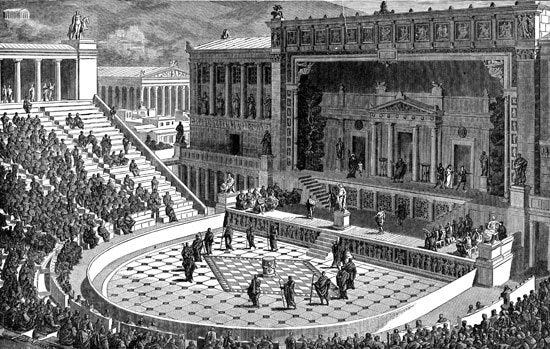
We can’t think clearly about what novels do without granting that there are other things worth doing that novels can’t or don’t. As suspicious as I am of “the machines”, I’m deeply interested in, say, the relationship between AI-generated text and a kind of Greek chorus: AI as the capacity to generate a pattern-matched portion of the collective record of human imagination. I’d love to read, or maybe even write, a play in which the human characters are written by a human, and a Greek chorus is generated via ChatGPT). Whether they’re egregores or tulpas or just echoes of past human consciousness, AI-generated material does, I think, create a new and interesting kind of reality out of human collectivity.
One of my starting exercises is to have students think about other media: songs, say, or paintings, or films (or, presumably, egregoric AI-generated Greek choruses). What can they do that novels can’t? And what can novels do that they can’t?
But a novel is different. A novel is person-to-person. It rests on a very particular set of assumptions about people, and communication, and language, and interior castles. Both the experience of reading a novel, and the subject matter of the novels that are, I think, the best at being novels, are ultimately about the mystery of the individual human being.
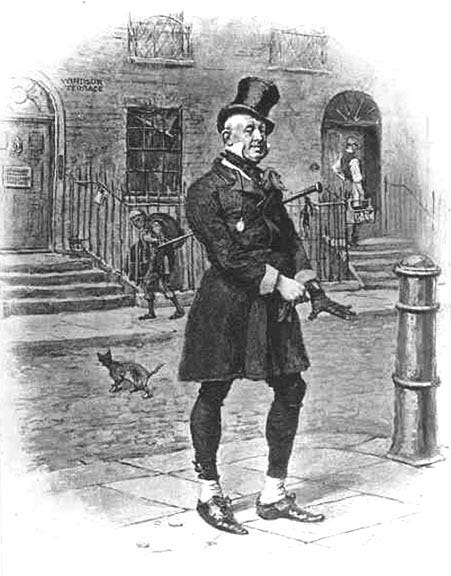
Sometime last year, probably when I was deep in reading about Kabbalah, and otherwise letting my Close-to-a-Title Magic Book drive me a little bit insane, it struck me just how bizarre, how downright magical, the experience of reading a novel really is, when you think about it. I was on a flight to Montreal for a symposium with Charles Taylorwhere I was to deliver a short paper on the quest for the Adamic language – and reading David Copperfield on the plane. And, because Charles Dickens is the kind of writer that does make you see his characters (I don’t know if you feel them), I became very conscious that I could see Mr. Macawber in, well, my mind’s eye. And it struck me (probably because I was reading too much about magic and the noetic realm) how utterly bizarre it is, how absolutely mind-blowing, that one of the things once-arbitrary shapes can do is convey in the intensely intimate space that is my own consciousness an analogous image, or the feeling, or some in-between phenomenon, to an image or feeling or sound or idea once in the equally intimate and private consciousness of a long-dead men. What’s on the page – far more than in the transmission of an image, or of a sound – is not the story itself but only some symbols to convey it. The novel is in my head — and Dickens’.
In Joseph Bottum’s The Decline of the Novel (a text, it seems, my students uniformly hate), Bottum makes the case that the novel is culturally obsolete: that the (in his view) Protestant, early modern, bourgeoisie assumptions about the self that the novel both reflects and reinforces have declined along with the novel’s importance as a cultural phenomenon. The Medieval Catholic world, he argues, is one where good and evil exist in nature; in the Protestant worldview, that drama is played out in the internal, private, dramas of the self, and that is what the novel best reflects. He traces its death knell – in a somewhat curmudgeonly fashion – to the fact that a man of Neil Gaiman’s talent (the book was published in 2019, before numerous sexual misconduct accusations against Gaiman become public) chose to write Sandman as a graphic novel.
My students – ever hopeful – disagree. But I think the decline of the novel is both real and hopeful for what the novel can do: and, in particular, for what the novel can do contra, say, the perfectly serviceable plot-driven piece of entertainment that’s written by AI. Or, for that matter, better captured onscreen.
But the novel can do something else better. And the better thing it does is remind you what it can’t do. Novels can’t tell you everything because human beings are limited, and language is limited, and also two human beings can never fully understand each other, not with all the technology in the world. This incapacity is almost certainly made worse by the Internet-driven erosion of our imaginative faculties, sure. But I think it’s also a statement about the mystery, the limitlessness, of every person. That we can’t be fully translated into language, or one another’s languages, is part of our sacredness. Maybe that’s why the Word has to be made flesh rather than papyrus and ink.
All novels, I often think, and have sometimes argued, are in some sense about novels. They’re about the limitations of storytelling, and also specifically storytelling in narrative, and what we think about our own lives, and about generic expectation, and about the ways we can and cannot understand each other. All novels, I think, are fundamentally tragedies, because nobody can ever fully disclose or express everything they’re trying to say; everybody misunderstands everybody else, to some extent; nobody can ever fully get inside somebody’s head.
Also, everybody dies, and the experience of reading a novel – whether or not the author is alive or not – is always the experience of an imperfect communication that evokes or echoes death. You and the author will never fully understand one another, and by the time you have a book in your hands, it is too late for correction. A human life is limited, and what we can say in it is limited, and we cannot undo our choices, at the end of it, and more than anything I think novels are about raging against, and also coming to terms with, those limitations. They accept the very facts – insufficiency of knowledge, insufficiency of lifespan – that the transhumanist vision seeks to overturn. Both the intimacy of reading them, and the tensions they can reflect to us about our relationship with other people, are predicated on the notion that we do all have this solitary imaginative realm, where we can see things in our heads, or hear them, where we can respond emotionally to them: an interior castle where Macawber roams.
Which is to say, I think the novel might become truly obsolete: if we overcome death, if we come to know everything, if we succeed in using information technology to expand our sense of self to include the repository of the knowledge of whole world, if we have so much competing disembodied information flooding into us that there is no space in our interior castles to see Macawber when we read him, that there is no difference between my interior castle and yours. And, when I watch AI slop displayed at dive bars at one o’clock in the morning, when I’m reminded that it will soon become routine for students to generate their novels-in-progress through ChatGPT, I do start to wonder if everything that I care about – novels, and the humanistic worldview that underpins them is passing away.
Maybe (I think, in my darker moments) the transhumanists are right, and the God-man is not a historical reality but just a metaphor for humans becoming gods through knowledge and gnosis and their ability to perform the great work of self-transcendence, and the appropriate conveyer of information in this new world order is not words nor even images but vibes, and to hold to the novel and the very particular individualistic vision of the self it offers, is as fundamentally reactionary and parochial a position, in 2025, as being a Christian is. Maybe we just need to open up our imaginative realms to images, and memes, and viral Tweets, and accept everything the tulpa-chorus has to offer; maybe the kinds of humans we’re become don’t need the intimacy of our own private imaginative realm, nor any personal glimpse into someone else’s, because we’re all caught up in the same waves and vibe shifts; because our castles are all colonized by the same memes. Maybe the new art, the great art, will be whatever we do as the kind of human beings we become, when we and the tulpas sing as one.
But if so, I think one of the roles of the novelist – however wrongheaded we may be – is to defend that particular individualistic stance. It is to use the intimacy and indeterminacy of language in order to relate one human imagination to another; it’s to affirm that human life, in the literal generative sense and the social one, is about a version of the quest for intimacy. And it’s to affirm, too, that the inevitable failure of that quest – we never can become one with anybody else – is also the affirmation that we exist, as human beings, not at the scale of the collective, nor the erotic dyad, but the scale of the individual soul. That’s the world that I, as a novelist, am trying to hold on to.
Or else, if it is passing away, maybe my job is instead to mourn it. Maybe it’s like swing dancing, for that matter — participating in an art form that’s passing away precisely because you want to hold onto the moment before it passes for as long as you can. Maybe all novels now have to be elegies: to argue, out of and because of their own irrelevance, that the most human thing you can do is try and fail to bridge this gap which no technology can really truly get across, between you and somebody else, for as long as that distinction matters.
I struggle with the same blistering historical consciousness! Why should I feel so lofty about novels when intellectuals once scoffed at them the way we might scoff at Meta AI Ray Bans today? In your interview with Eugene McCarraher, I had to laugh (affectionately) when he started judging students for using AI to write messages to their friends. (Dr. McCarraher -- frankly, I'm jealous of students who get to be in your class and can't wait to read your new book, which is on my kitchen counter.) I have precious memories of the beloved Stanley Aronowitz yelling at us all in class about how he used to write 90 page love letters by hand, and we were idiots for using text messages. He's right! He's wrong! It's tough to figure out how to objectively evaluate different media/technological forms/practices, as if they have inherent potentialities that persist through time and context. They don't! They do! All I'm certain of is that art and intellect can appear in the most unlikely of places, which thank god, because really, the world has been burning long before computing. Anyway, thanks for making your gifts shine here.
This was amazing. Loved it.